

Physicians Practice Article: Data analytics can help you understand and mitigate risk

Manual efforts to predict cash flow may leave you vulnerable to revenue problems that can quickly spiral out of control.

The COVID-19 pandemic has left a permanent imprint on the healthcare landscape—one that will undoubtedly follow the industry into the new year and beyond. The heightened role of technology, especially as it relates to the use of data analytics to inform operational decision making, proved a key differentiator for understanding the short-term impact and tactics required to survive. Data analytics continues to play a major role in strategic planning and decision making as the pandemic accelerates through the winter where making the wrong decisions based on feelings rather than facts could put a provider practice out of business.
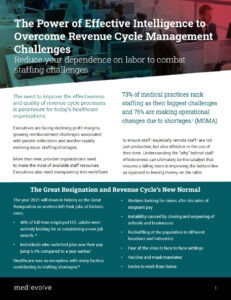
The Power of Effective Intelligence to Overcome Revenue Cycle Management Challenges
EBOOK DOWNLOAD
The Power of Effective Intelligence to Overcome Revenue Cycle Management Challenges

Related Posts

Why Cost Per Successful Payment Should Replace Denial Rate

In this guide, we break down why denial rate stops being useful once a team is already hitting it and what to track instead. You’ll see how a claim that’s never denied can still take six touches and multiple people to get paid, why the industry’s own denial-touch benchmark is missed by a factor of three, and how one ambulatory surgery center management company cut denials 18% and labor dependence 30% by treating claims, denials, and cost as one connected problem.
Read More »

Why “Cost Per Successful Payment” Should Replace “Denial Rate” – no form

A team can spend 40 hours resolving 200 claims, watch 180 of them pay, and still report a comfortable 8 percent denial rate. That number doesn’t tell you what it cost to get there.

In this guide, we break down why denial rate stops being useful once a team is already hitting it and what to track instead. You’ll see how a claim that’s never denied can still take six touches and multiple people to get paid, why the industry’s own denial-touch benchmark is missed by a factor of three, and how one ambulatory surgery center management company cut denials 18% and labor dependence 30% by treating claims, denials, and cost as one connected problem.

Read More »
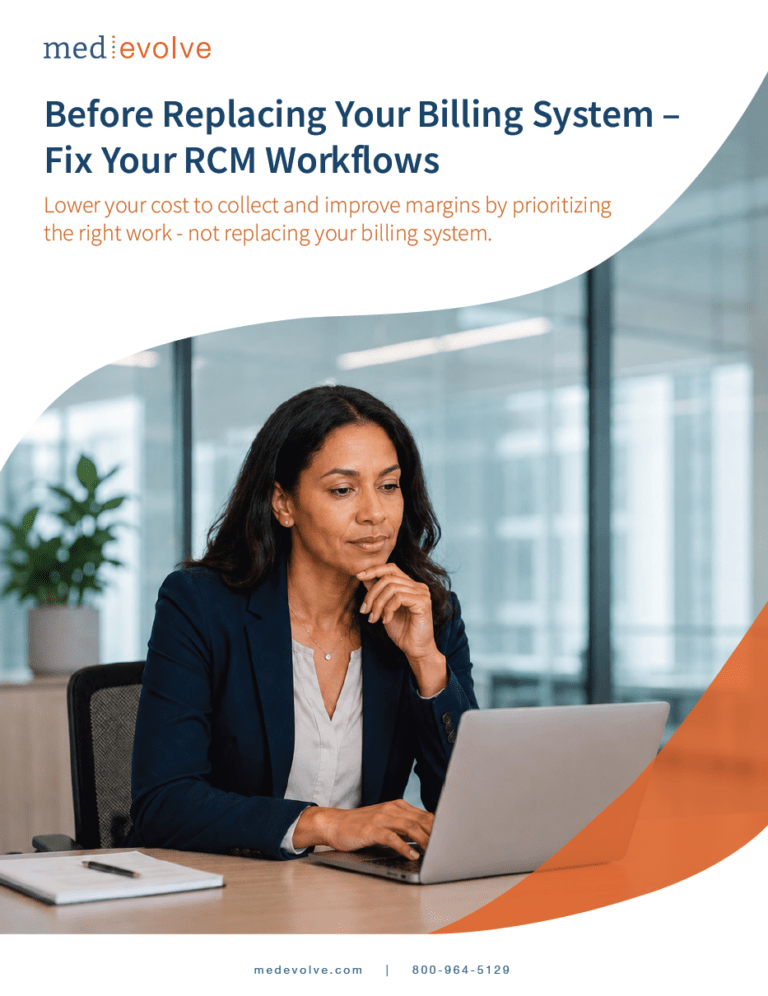
Before Replacing Your Billing System, Fix Your RCM Workflows

Before Replacing Your Billing System – no form

Hospitals and health systems spend an estimated $40 billion a year on billing and collections. A system replacement changes the interface, not necessarily the economics.

In this guide, MedEvolve breaks down why a billing system replacement can leave the real problem untouched. You’ll learn how to tell whether your cost to collect is a platform issue or a workflow issue, how to prioritize claims by financial risk instead of age or balance, and how one MedEvolve customer grew to nine new centers without adding headcount by fixing the work, not the software.
Read More »
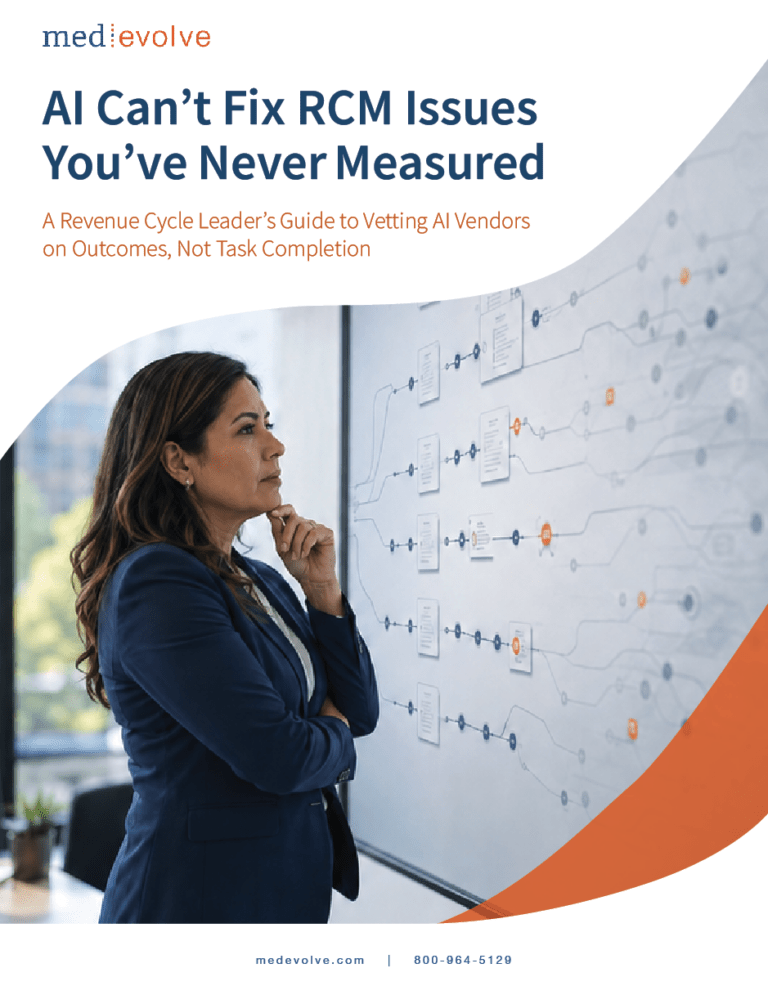
Cover of MedEvolve eGuide "AI Can't Fix RCM Issues You've Never Measured" featuring a businesswoman studying a revenue cycle workflow diagram on a whiteboard.

AI Can’t Fix RCM – no form

Most AI vendor pitches are built around task-completion metrics: claims processed, calls placed, codes assigned, denials ‘worked.’ These numbers are easy to demo and easy to report. They are also, on their own, meaningless.


Read More »

Reduce RCM labor dependence with financial clearance, insurance A/R, & patient A/R automation modules with real-time analytics.

Increase productivity and simplify front & back office processes while keeping your staff focused with our flagship PM system.

Recent Posts
AI Can’t Fix RCM – no form

Most AI vendor pitches are built around task-completion metrics: claims processed, calls placed, codes assigned, denials ‘worked.’ These numbers are easy to demo and easy to report. They are also,

Read More »