



Healthcare Business Today: Rural Hospitals—and Their Patients—Can’t Afford Administrative Waste
In rural hospitals, eliminating unnecessary work can free up time for higher-value activities that directly support patient care.
Declining reimbursements and rising costs create a margin vice.
Consumers now hold a larger financial burden they can’t always pay.
Payors are deploying AI to deny claims at scale.
Organizations are chasing too many goals—often 70+ “initiatives” that do nothing but exhaust staff and dilute results.
Administrative waste remains invisible and expensive.
AI is on every vendor’s pitch deck, but often misunderstood.
Tech companies entering the space lack real-world revenue cycle experience.
Most financial systems remain non-interoperable.
AI tools without feedback loops are shiny distractions, not solutions.
Legacy metrics like Days in A/R and Net Collection Rate are lagging and subjective.
They don’t reveal performance issues or staffing inefficiencies.
Time to move from “what happened” to “what’s happening now.”
Zero-Touch Rate: % of claims paid without human intervention.
First-Touch Payment Rate: Was the claim paid after the first human action?
Average Touches to Resolution: How many times are humans touching each claim?
Avoidable Touch Rate: The motherlode of waste.
Unworked Claim Weeks: Measure backlogs to forecast risk or overstaffing.
Most teams are overstaffed due to inefficiencies.
Subjective reviews and poor data structures mask low performers.
Delegation creates invisible bottlenecks and delays.
Staff game metrics—cherry-picking easy claims or following up prematurely.
Free-text documentation in billing systems blocks real analysis.
Rural hospitals are closing, creating access deserts.
Reimbursement is hard to secure, and grant access requires excessive effort.
Community healthcare is collapsing under administrative complexity.
AI can be valuable, but only with clean, structured data and realistic use cases.
Do not invest in AI before fixing process and visibility.
Promising areas: denial prevention, coding support, claim edits, audit trails.
Be skeptical. Tech bros don’t understand your claims denials.
Assess staff performance, waste, and process breakdowns.
Establish a Baseline using leading indicators.
Prioritize 2–3 realistic, high-impact initiatives.
Hold Vendors Accountable—stop waiting for their self-graded report cards.
Avoid Shiny AI Toys—until you’re ready.
Traditional metrics are useless without context.
Your team is probably doing too much of the wrong thing, too often.
Measure touches. Track results. Reward productivity.
Be strategic, not reactive.
AI will not save you. A ruthless grip on your own data might.
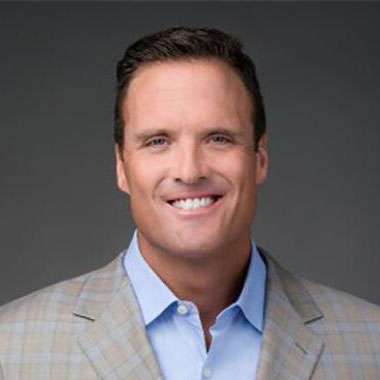
Matt Seefeld, Chief Executive Officer at MedEvolve, brings over 24 years of management consulting experience in the healthcare industry. He has extensive expertise in the assessment, design and implementation of process improvement programs and technology development across the entire revenue cycle. Matt began his career with Stockamp & Associates, Inc. and worked for both PricewaterhouseCoopers LLP and Deloitte Consulting LLP in their healthcare and life sciences practice lines. In 2007, he developed a business intelligence solution and founded Interpoint Partners, LLC, where he served as Chairman and Chief Executive Officer. In 2011, he sold his business to Streamline Health Solutions where he then served as Chief Strategist of Revenue Cycle followed by Senior Vice President of Solutions Strategy until 2014. Matt ran global sales for NantHealth and provided consulting services for healthcare technology and service businesses nationwide, prior to joining MedEvolve full-time.
Reduce RCM labor dependence with financial clearance, insurance A/R, & patient A/R automation modules with real-time analytics.
Increase productivity and simplify front & back office processes while keeping your staff focused with our flagship PM system.
In rural hospitals, eliminating unnecessary work can free up time for higher-value activities that directly support patient care.
Mark Alyn speaks with MedEvolve CEO Matt Seefeld about why the U.S. healthcare system is confusing, inefficient, & under strain.
Hidden costs of payer denials: how front-end errors and repeated claim follow-ups strain health systems and drive administrative burden.
Seefeld shares how AI-enabled revenue cycle management solutions are helping rural facilities regain financial stability.
Monday – Friday
7:00 am – 7:00pm CT
2261 Market Street
Suite 93065
San Francisco, CA 94114